
Your race doesn’t begin at the starting line — it begins when a runner walks into packet pickup. A smooth, professional packet pickup builds excitement and confidence. A chaotic one creates frustration before the race even starts.
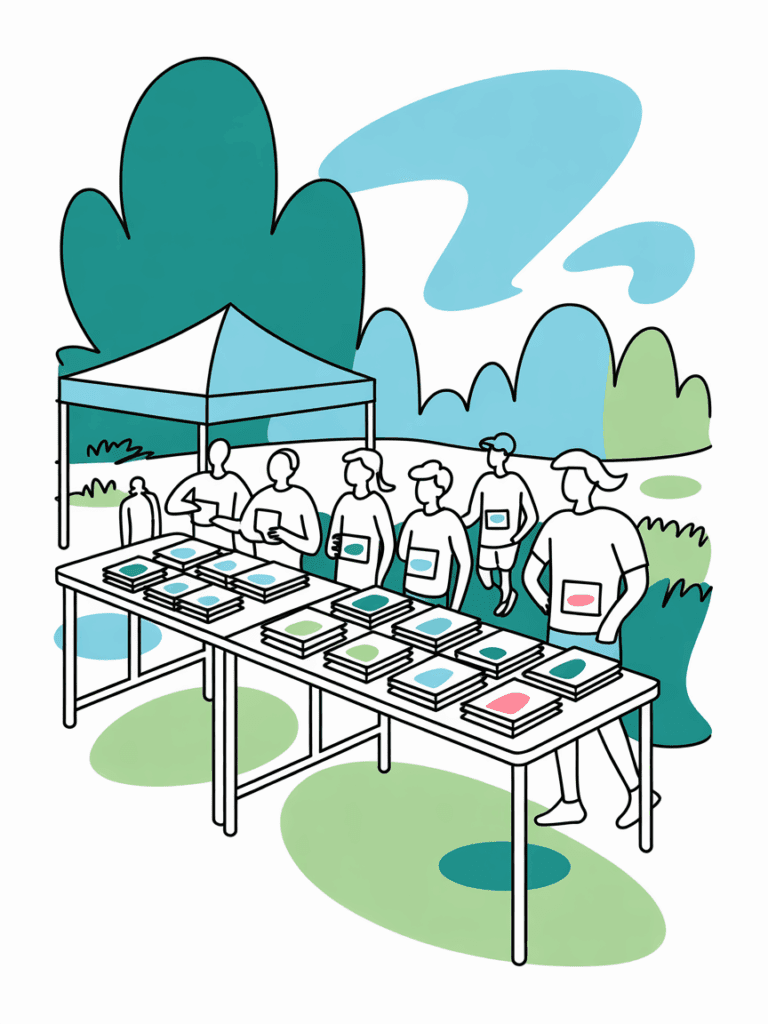
This guide breaks down the packet pickup process step-by-step, showing how race directors can evolve from “Good” systems that work, to “Better” systems that streamline, to “Best” systems that impress.
Each section includes challenges to avoid, ideal volunteer roles, and essential checklists. Use this as your roadmap to deliver a flawless pre-race experience.
Think of packet pickup as your “first finish line.”
Every positive interaction builds runner trust.
Your volunteers are your race ambassadors — train them like team captains, not assistants.
Why It Matters: Registration sets the tone for every other packet pickup station. A well-managed system keeps lines moving, reduces data errors, and builds runner confidence from the start. The right approach depends on your comfort with technology and how tightly you want to control race-day logistics.
Approach: Use printed registration forms, pens, and clipboards to collect participant details. Payments are made by cash or check.
Print blank registration and waiver forms
Bring clipboards, pens, and small cash box for change
Organize completed forms alphabetically
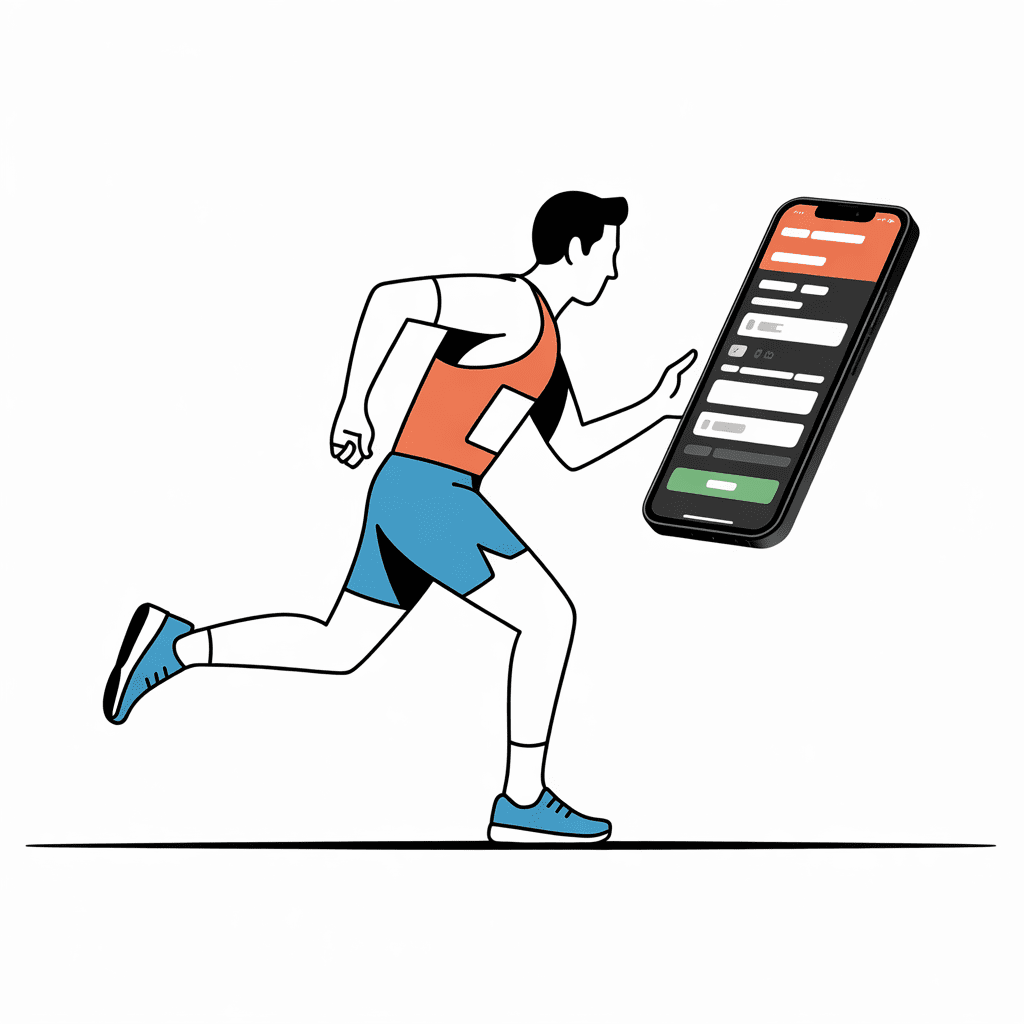
Approach: Use laptops or tablets to process signups directly in an online registration system. Accept credit cards and digital payments on-site.
Enable same-day registration in your platform
Bring extra chargers, hotspots, and extension cords
Clearly label “Pre-Registered” vs “New Registration” lines
Approach: Close registration in advance and process all entries online. Only pre-registered runners appear in the digital check-in list.
Communicate the registration deadline clearly to all runners
Print a backup roster as a failsafe
Test the online lookup tool before opening pickup
Don’t rely solely on venue Wi-Fi. Always bring a backup hotspot and power banks. Congested venues can overload networks when hundreds of phones connect at once.
Why It Matters: Your bib system connects the runner’s identity to their timing data and results. The more efficient your assignment process, the smoother your check-in flow and the fewer errors you’ll face on race day.

Approach: Assign bib numbers before the event and organize them by range or alphabetically.
Label bins clearly by number range
Keep a printed list for quick lookups
Prepare blank bibs for replacements
Approach: Leave bibs unassigned until pickup. Volunteers assign the next available number through an online system or shared spreadsheet.
Test your lookup process thoroughly
Reserve a range of blank bibs for emergencies
Assign bibs sequentially to prevent gaps
Consider offering a “bib mailing” option for runners who can’t attend packet pickup but will be present on race day. Mailing bibs in advance not only reduces on-site lines but also shows flexibility and professionalism — giving participants confidence that their race experience will be smooth from start to finish.
Pair new volunteers with experienced ones during the first rush hour.
The extra set of eyes and hands ensures smooth training on live systems — and reduces early-day mistakes when lines are longest.
Why It Matters: Your bibs are more than just numbers — they’re your connection between runners, timing, and branding. The right choice influences accuracy, event professionalism, and sponsor visibility.

Approach: Use standard numbered bibs without additional features.
Use waterproof materials
Keep spare bibs for no-shows or replacements
Approach: Include tear-off tabs for timing, raffles, or meal validation.
Train volunteers on tab use
Provide containers for tab sorting at the finish line
Approach: Use bibs with embedded RFID timing chips for automatic, contactless results.
Test chip readers before event day
Coordinate unique chip IDs with your timing vendor
Custom bibs serve as race souvenirs and sponsor showcases. Even a simple QR code linking to results adds a modern, professional touch.
Why It Matters: Swag bags and sponsor items are an opportunity to delight runners and strengthen partnerships. Your approach determines how smooth your flow is — and how much effort you’ll spend before race day.
Approach: Assemble identical bags with shirts, swag, and sponsor items ahead of time.
Set strict sponsor delivery deadlines
Keep bags in cool, dry storage
Prepare a 10% buffer inventory
Approach: Lay out sponsor materials on tables for runners to collect as they walk through.
Group items by category or sponsor
Label tables clearly
Track inventory to restock popular items
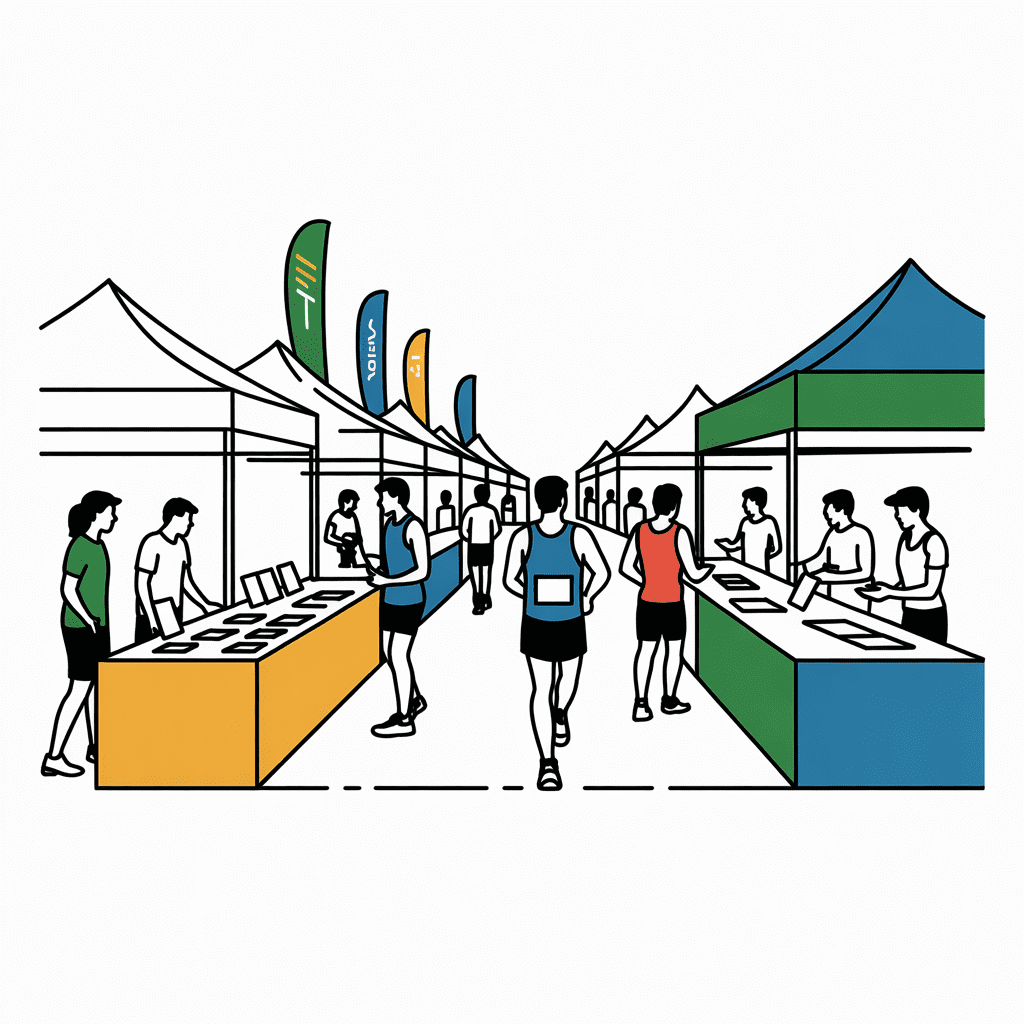
Approach: Transform packet pickup into a mini-expo with sponsor booths and interactive displays.
Plan booth layout for natural movement
Provide signage and power as needed
Assign setup times and load-in instructions
Choose from drawstring bags, zip-top bags, eco-friendly paper totes, or reusable bags based on budget and sponsor expectations. Standard poly tote bags offer cost savings while maintaining professional appearance.
Invite vendors to run raffles or product demos. Runners engage longer, and sponsors gain more visibility — a win for both sides.
Why It Matters: Shirt distribution is often the slowest packet pickup station. Clear organization prevents size mix-ups, long waits, and frustrated runners.

Approach: Include shirts in each runner’s pre-packed bag.
Verify shirt data before stuffing bags
Post exchange policy signage
Approach: Give volunteers a lookup list or ticket noting shirt size. Runners collect shirts from a dedicated table by showing their bib or voucher.
Clearly label shirt bins by size
Maintain a backup supply of popular sizes
Record size changes in log
Provide fans, water, and shaded areas at shirt tables. Cool volunteers are alert volunteers — and happy volunteers keep lines moving.
Why It Matters: Even the best system can collapse under poor layout. Designing your packet pickup flow prevents cross-traffic, bottlenecks, and weather-related chaos.
Approach: Use a single tent or table for all stations.
Display bold signage for each step
Provide weather protection and airflow
Approach: Create dedicated areas for registration, bibs, shirts, and swag.
Use directional arrows and signage
Plan overflow space for peak times
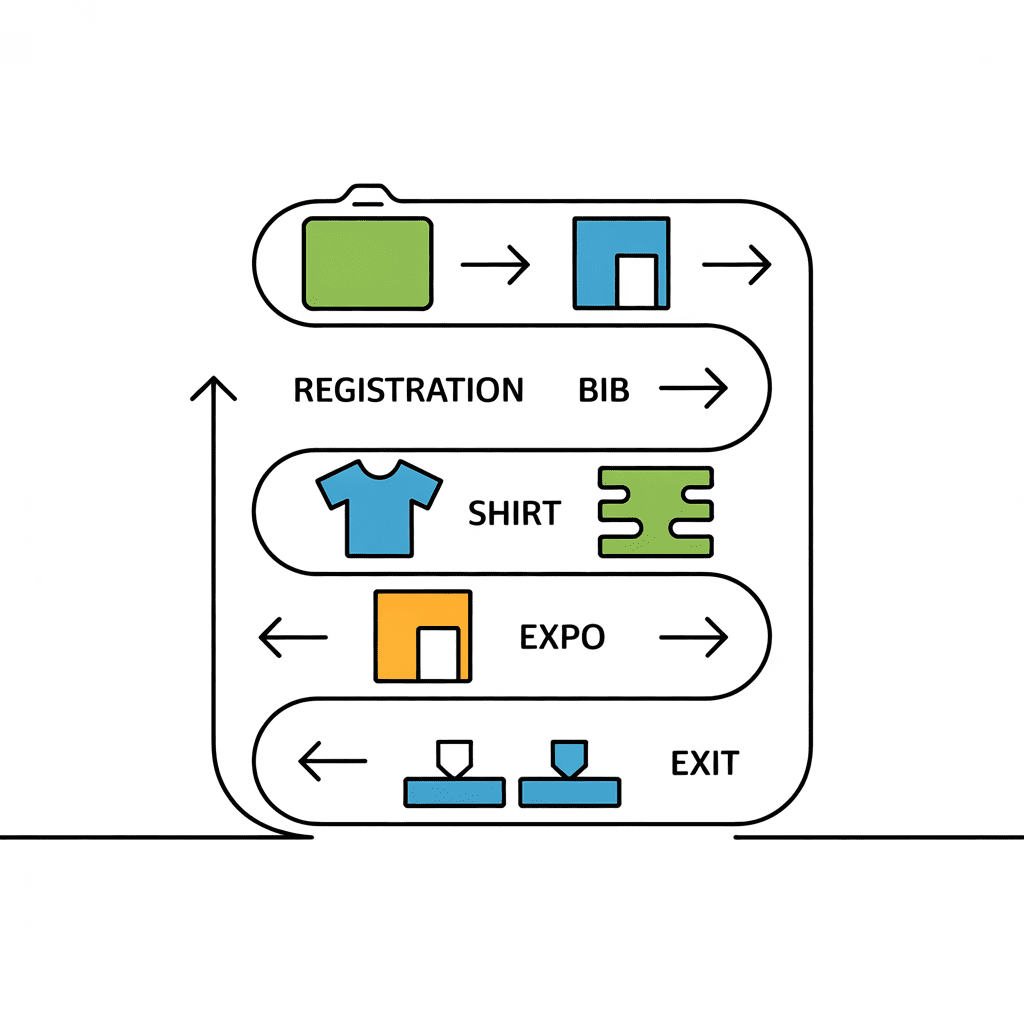
Approach: Create a linear path — Registration → Bib → Shirt → Expo → Exit.
Print and distribute volunteer layout maps
Secure tents with anchors or weights
Include a dedicated problem-resolution station
Linear flow approach: Align tables in sequence, use stanchions and rope to control lines, place overhead signage for visibility.
Space-limited option: Combine registration + bib into a single step, then separate the shirt table.
Multi-tent series: Position tents so prevailing wind runs parallel to aisles, not perpendicular. Use overlapping tent coverage.
Lower-resource option: Single large tent partitioned inside with stations, or staggered small pop-ups.
Storm plan: Reserve indoor backup location (gym, community hall). Use tent sidewalls when needed, move critical stations under covered areas first.
Wind protection: Use ground anchors, sandbags, tie-downs. Keep signage low to avoid wind sail effect. Side panels provide additional stability.
Before race day, walk through your packet pickup area from a runner’s perspective. If it feels confusing to you, it will feel worse to them.
Why It Matters: Technology simplifies packet pickup — but only if it’s reliable. Choosing the right equipment ensures speed, accuracy, and peace of mind.

Approach: Volunteers check names against printed lists.
Print alphabetized lists
Keep pens and clipboards handy
Provide visible “Check-In” signage
Approach: Runners present QR codes from confirmation emails, scanned using phones or tablets.
Test scanners before the event
Bring chargers and power banks
Keep printed backups in case of an outage
You don’t need costly hardware — your team’s smartphones can scan QR codes instantly. Just test the feature in advance and keep devices charged.
Why It Matters: Your registration platform defines what’s possible during packet pickup. Each system has unique tools, pricing, and capabilities that affect your workflow.
If sponsors can cover the processing fees, go for a professional-grade system. If you’re self-funding, Webscorer offers an excellent low-cost all-in-one solution.
Budget estimates include shirts, bibs, swag items, equipment rentals/purchases, volunteer supplies, and venue costs. Actual expenses vary based on shirt quality, sponsor contribution levels, and existing equipment inventory.
for simplicity and minimal setup — reliable, but slower.
to integrate tech and reduce manual labor.
to deliver a polished, scalable experience that delights both runners and sponsors.
Each “Best” system creates smoother flow, fewer mistakes, and happier volunteers.
Success comes from systematic preparation and execution. Use this comprehensive checklist to ensure nothing falls through the cracks as you prepare for packet pickup day.
Confirm your registration, bib, and swag strategies.
Verify scanners, software, and connectivity.
Define who manages each table and backup.
Map flow, mark signage, and set overflow zones.
Count bibs, shirts, swag, and extras.
Send runner instructions and pickup times.
Practice check-ins before the public arrives.
Capture lessons for continuous improvement.
The packet pickup experience sets expectations for your entire event. Invest the time to build reliable systems, train your team thoroughly, and execute with confidence.
A smooth packet pickup creates excited, relaxed runners who arrive at the starting line ready to race. That’s worth every minute of preparation.
Have runners go into the race with confidence that it’s well put together!
Start simple and scale up as your race grows. Perfect execution of a basic system beats failed execution of an overly complex one. Document what works and what doesn’t after each event. Continuous improvement creates excellence over time.